What Age Should Kids Start Martial Arts? A Karate Instructor's Guide for Parents
What Age Should Kids Start Martial Arts?

The Most Common Question Parents Ask
One of the most frequent questions I hear as a martial arts instructor is: “What age should my child start martial arts?”
After more than 30 years of teaching children and training thousands of students at United States Karate Academy, my answer is consistent and clear:
The earliest age I recommend for children to begin martial arts is 4 years old.
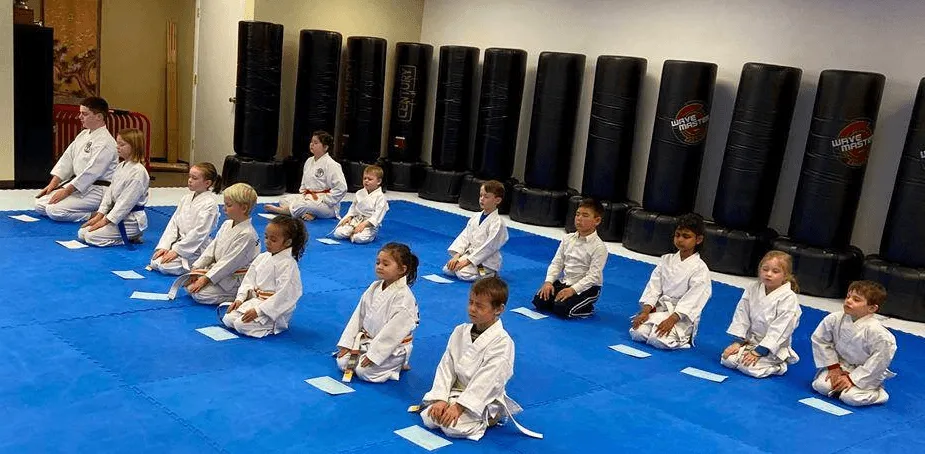
This is why we created our age-specific program for children ages 4 to 7 called the Knee-High Samurai Program. It is not a scaled-down version of adult karate. It is a structured pre-karate program designed specifically for early childhood development—physically, mentally, and emotionally.
Why Age 4 Is the Right Starting Point
At age four, children are developmentally ready for structured learning when it is presented in the right environment.
They can begin to:
Follow simple instructions
Participate in group activities
Develop early focus and attention skills
Build basic coordination and balance
However, the key is not just whether a child is “ready,” but whether the program is designed for their stage of development.
That is where many programs miss the mark. Our Knee-High Samurai program is intentionally built around how children ages 4 to 7 learn best. Everything is structured for their attention span, physical abilities, and emotional development.
A Real Transformation I Will Never Forget
Over the years, I have seen countless transformations, but one student’s journey stands out clearly.
He came into our dojo extremely shy. He could not make eye contact, always looked down, and had very slumped shoulders. His mother brought him in because he was being bullied both at school and in the neighborhood.
At the beginning, he was quiet, hesitant, and lacked confidence in himself.
But through consistent training, structure, and encouragement, something began to change.
He started standing taller. He began making eye contact. He started believing in himself.
Years later, that same student went on to achieve remarkable success. He won:
The Junior Olympics in Karate
The USA National Karate Championships
The USA Karate Open
But what matters even more than the trophies is what he became as a person.
Today, he is living his dream as a stand-up comedian, performing in Las Vegas and across the United States.
That transformation is not an exception in martial arts. It is what happens when children are given the right foundation at the right age.
Common Concerns Parents Have About Starting Martial Arts
Many parents hesitate to enroll their child in martial arts because they believe their child is not ready. The most common concerns I hear are:
“My child is too shy.”
“My child is too active and won’t listen.”
“My child has a short attention span.”
“My child will just run around and not focus.”
What I always explain to parents is this: those are not reasons to avoid martial arts. Those are often the exact reasons children benefit from it the most.
We do not require children to arrive with discipline, focus, or self-control already developed. We teach those skills over time through structure, repetition, and positive reinforcement.
Progress Matters More Than Perfection
One of the most important things I tell parents is to focus on progress, not perfection.
If a child starts with a five-minute attention span and, over time, improves to ten minutes, that is not a small change. That is a 100% improvement.
That is how real development happens—step by step, month by month, through consistent training and encouragement.
What we consistently see in our students is:
Shy children become confident
Highly active children learn to channel their energy in a positive way
Distracted children develop focus and discipline
Hesitant children develop courage and self-belief
Martial arts meets children where they are and helps guide them forward.
The 9 Core Skills We Teach in Our Knee-High Samurai Program
Our program for ages 4 to 7 is built around nine essential life skills that go far beyond physical techniques.
Discipline
Doing what you are supposed to do, even when it is hard.
In karate, discipline means listening to your instructor, trying your best, and never giving up. In life, it means making good choices, following directions, and finishing what you start.
Balance
Staying steady in your body and calm in your mind.
In karate, balance helps children move safely and confidently. In life, it helps them stay calm when things feel challenging or uncertain.
Memory
Remembering what you learn so you can improve every day.
In karate, memory helps children learn techniques, routines, and rules. In life, it supports learning in school and daily problem-solving.
Teamwork
Working together and helping others succeed.
In class, children learn to encourage their classmates, take turns, and be supportive training partners. In life, this becomes friendship skills and social confidence.
Fitness
Building a strong, healthy, and energetic body.
Martial arts helps children develop strength, endurance, and healthy movement habits that last a lifetime.
Control
Being the boss of your body, actions, and emotions.
Children learn when to use energy and when to stop, which carries directly into behavior at home and school.
Coordination
Moving the body in harmony with the mind.
This supports everything from sports performance to handwriting and everyday physical activity.
Focus
Paying attention and giving your best effort.
Focus is one of the most important school readiness skills a child can develop.
Courage
Being brave enough to try, even when you feel nervous.
Every class gives children opportunities to try new skills, build confidence, and overcome hesitation.
Why Early Childhood Training Matters for Life
The ages of 4 to 7 are some of the most important developmental years in a child’s life because habits formed during this time often last a lifetime.
What children learn now becomes part of how they think, behave, and respond later in life.
I often compare this to learning how to ride a bike. Once you learn it as a child, you never truly forget. Even years later, you can get back on and ride with confidence.
The same applies to swimming. If a child learns how to swim early in life, that skill stays with them and could one day help save their life.
That is why I always tell parents:
Every child should learn two things early in life: swimming and martial arts. Because both can one day save their life.
These early lessons are not temporary. They become lifelong skills and habits.
Final Message to Parents
If you are wondering whether your child is ready for martial arts, the question is not whether they already have discipline, focus, or confidence.
The real question is whether you want them to develop those qualities during the most important developmental years of their life.
These early years matter more than most parents realize.
What your child learns today will stay with them for life.
Every child should learn two things early in life: swimming and martial arts... Because one day, either can save their live. ~Miguel Serrano, Director and Founder: United States Karate Academy